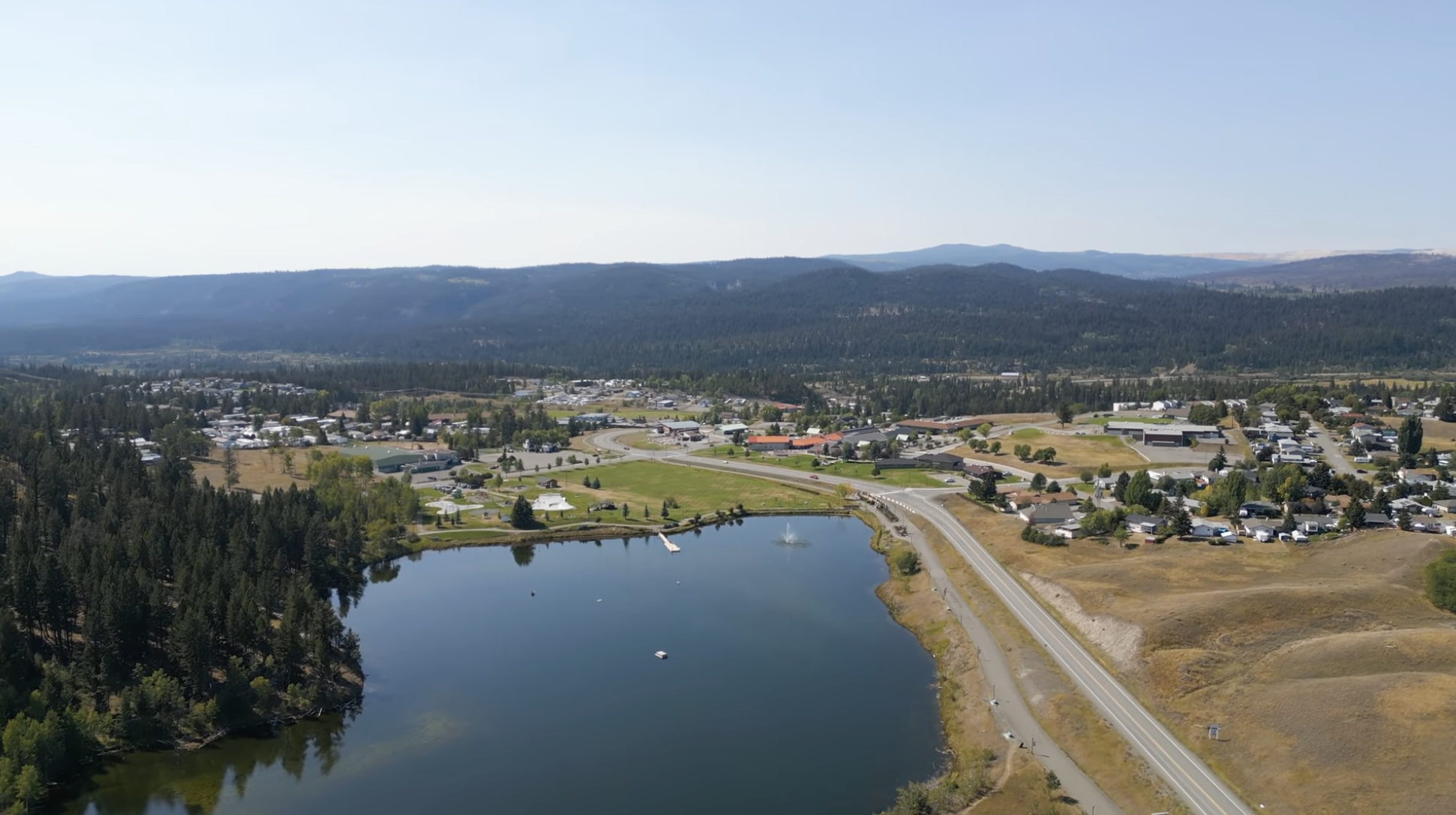
SaveLoganLakeForest.ca — A Community Defence Campaign
Keep Industrial Solar Out of Our Community Forest
What was first presented as a 104 MW solar project has grown into a two-phase, 208 MW industrial energy proposal — with perimeter fencing, heavy-vehicle access roads, and transmission infrastructure cutting through approximately 1,918 acres of community forest and grassland beside Logan Lake.
This project would add thousands more industrial vehicle trips through town. The public deserves honest numbers, a full environmental review, and upfront financial security — before a single panel goes in.
Logan Lake residents deserve the full picture before any decisions are made.
The Initial Project Description describes two 104 MWAC phases within an approximately 776-hectare project area, with a final disturbed footprint expected to be smaller than the full project area.
The BC Environmental Assessment Is Open
Public participation is being recorded. Register, comment, or apply to the Community Advisory Committee.
What's Really at Stake
Community forest trails used by families, riders, and recreationists today — replaced by fenced industrial solar infrastructure tomorrow.
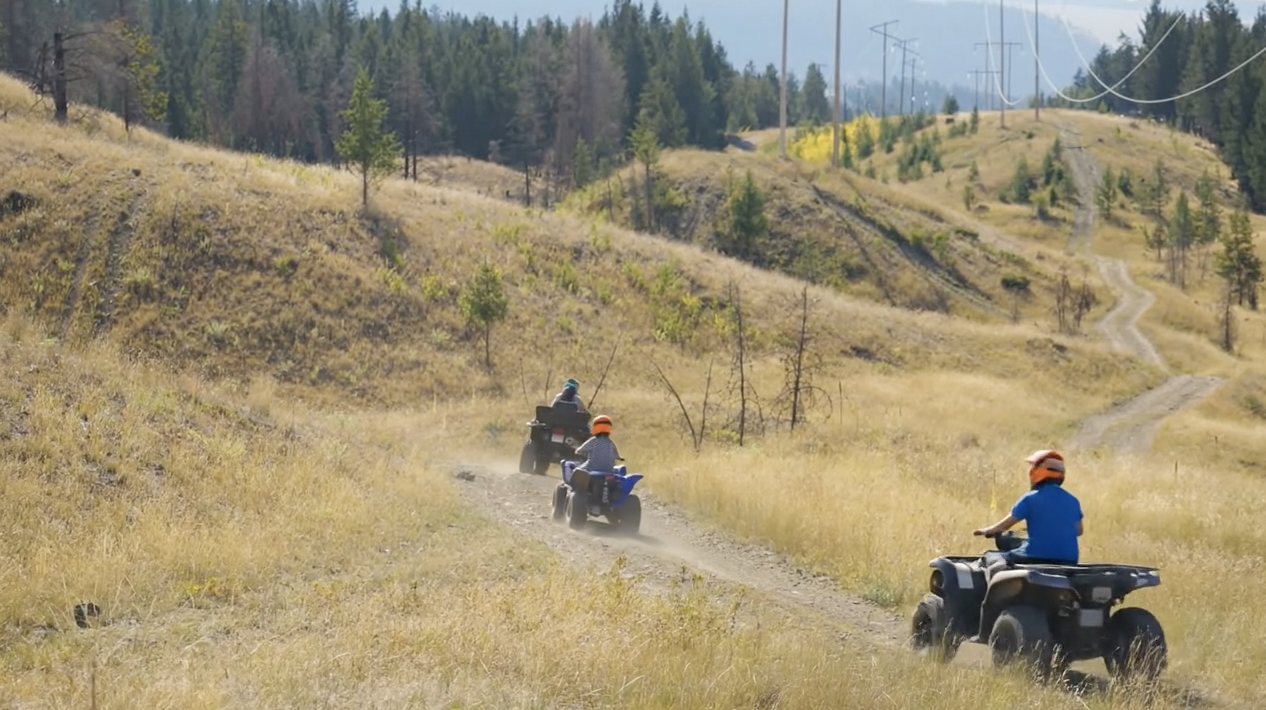 Today
TodayCommunity Access & Recreation
Open trails, ATV riding, hiking, and family recreation on post-wildfire recovering land that the community actively uses and values.
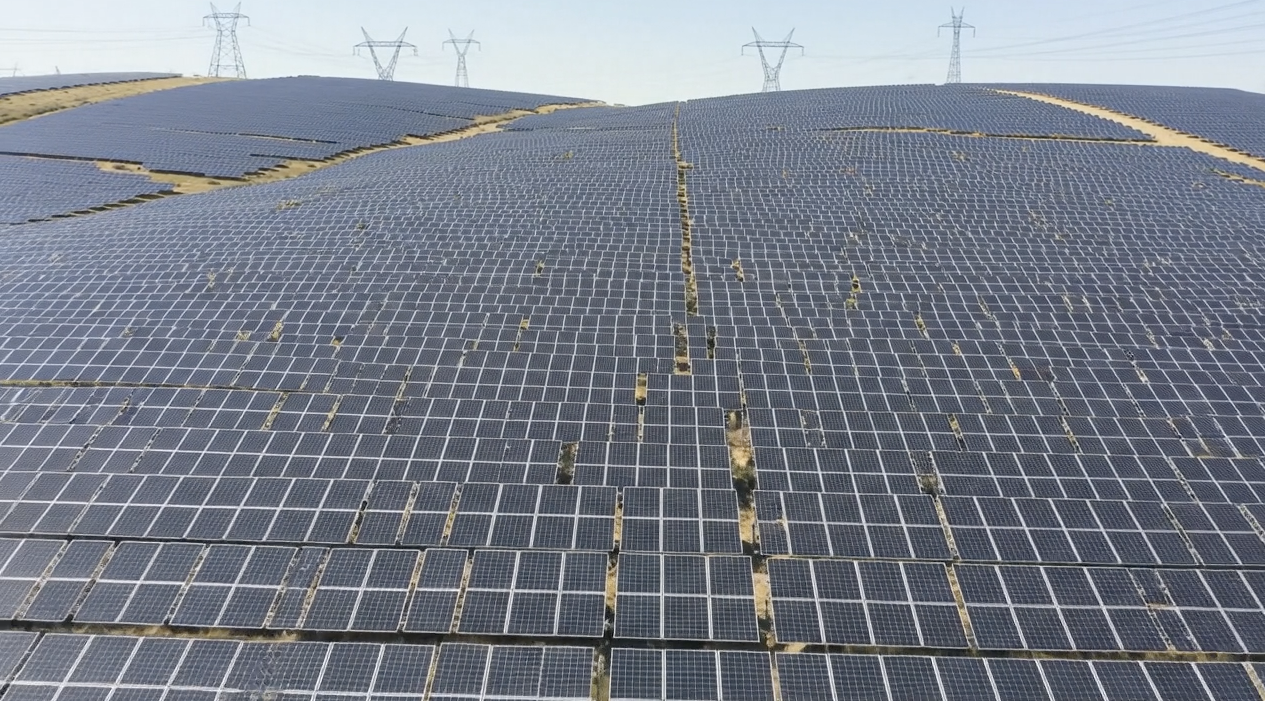 After Industrial Solar
Fenced Industrial Infrastructure
Perimeter fencing, restricted access, and industrial panels stretching across the landscape — for approximately 30 years through ~2060.
Once this land is converted, community access is gone for a generation.
The developer has indicated they will consider accommodating some trails. However, the Initial Project Description shows panels directly on top of the major access route out of town — meaning access to the broader recreation area would be fundamentally impacted regardless of individual trail adjustments.
Trails, riding areas, and recreation access that families depend on would be replaced by fenced industrial infrastructure. This is not a temporary disruption — it's a 30-year commitment that fundamentally changes how this community forest land is used.
Why Scale Matters
At approximately 776 hectares — about 1,918 acres — the two-phase, 208 MWAC proposal represents a significant change in land use. Developments at this scale introduce extensive shared infrastructure, doubled electrical capacity, long-term land commitments through approximately 2060, and substantial decommissioning liability.
Material volumes across both phases are substantial: tens of thousands of panels, racking systems, inverters, shared substation and transmission infrastructure, access roads, and security fencing. This is not a short-term proposal. It is a multi-decade industrial land commitment.
A Landscape Shaped by Wildfire
The area under consideration has already experienced major wildfire through the 2021 Tremont Creek event. The land is now in recovery — not in a mature or undisturbed state.
Decisions made now will determine how this landscape recovers and is used in the future. Converting recovering land to a two-phase, 208 MWAC industrial development removes future management options and locks in a single use through approximately 2060.
Wildfire and Long-Term Infrastructure
Wildfire is not a theoretical risk in this region — it is a known and recurring reality.
Fire-Prone Landscape
The region surrounding Logan Lake has experienced multiple significant wildfire events. Siting a two-phase, 208 MWAC development with shared electrical infrastructure in this landscape demands rigorous fire-risk evaluation.
Electrical Systems and Fire Risk
A 208 MWAC two-phase development doubles the electrical equipment on site — high-voltage systems, inverters, transformers, and shared substation infrastructure all require evaluation under wildfire conditions.
Damage and Cleanup
Fire can damage panels, inverters, and wiring across both phases — releasing materials and creating environmental cleanup challenges. Decommissioning liability for a 208 MWAC facility is substantially larger than for a single phase.
Recovery vs. Conversion
Post-wildfire land has recovery potential. Converting it to a two-phase industrial development through ~2060 forecloses natural regeneration and future land-use flexibility for the entire project area.
What's Being Proposed
A two-phase industrial solar development totaling 208 MWAC is now being advanced near Logan Lake.
- This is a major scale increase. What was initially presented as a single 104 MWAC project has expanded into a two-phase, 208 MWAC development within a project area of approximately 776 hectares (~1,918 acres).
- Both phases share major infrastructure. Access roads, substation, operations building, and transmission route are shared — meaning the full scale of the project is planned from the outset, not an afterthought.
- Land-use impact must be evaluated at full scale. Assessing Phase I in isolation understates the true extent of land conversion. The cumulative impact of both phases on the landscape, watershed, wildlife, and community access must be reviewed together.
- The concern: To install tens of thousands of panels across two phases, the developer would clear post-wildfire recovering forest and grassland, build new roads and security fencing, and construct a high-voltage interconnect — directly adjacent to Community Forest land managed for public benefit.
Want your input formally considered? Participate in the BC Environmental Assessment process.
Go to Official Engagement PageThis Is Not Just One Project
The Logan Lake region is being pressured by multiple major industrial and energy developments at once. Most of the public has no idea these projects are converging on the same landscape at the same time.

Red: proposed and existing industrial project areas. Green: Tunkwa Provincial Park.
Outlined areas are approximate. This map likely represents only a portion of projects currently in development across the region.
Most of the public has no idea these projects are converging on the same landscape at the same time.
This region is already shaped by major industrial activity — one of Canada's largest open-pit copper mines, extensive pipeline and transmission corridors, and forestry operations. These existing uses are part of a landscape that also supports recreation, wildlife habitat, and rural communities.
Now, multiple new proposals are being added on top of existing and expanding industrial footprints. Utility-scale solar developments, wind energy projects, mine extensions, and pipeline expansions are all advancing in the same broader area — often simultaneously, often through separate regulatory processes, and often without any coordinated assessment of their combined effects.
This is not anti-progress rhetoric. This is about scale, concentration, and fairness. People living near or using this area are entitled to ask whether this rural region is being over-targeted — and whether cumulative effects are being considered early, not after projects are already entrenched.
Projects in the Wider Area
Existing, proposed, expanding, or in development — these are the major industrial and energy projects overlapping in the Logan Lake / Ashcroft / Highland Valley corridor.
m.ah a temEEwuh Solar Project
SolarA proposed two-phase utility-scale solar development — Phase I at 104 MW and Phase II also described as 104 MW — on Crown land near Logan Lake, within a landscape currently used for forestry, recreation, and community forest management.
Highland Valley Wind Project
WindA proposed massive wind energy development in the Highland Valley area, adding large-scale turbine infrastructure to the same broader corridor.
Enbridge Sunrise Expansion
PipelineExpansion of existing pipeline infrastructure in the broader region, increasing the capacity and footprint of the Westcoast / Enbridge pipeline system.
Highland Valley Solar + Storage
SolarA proposed solar and energy storage development near Ashcroft, adding another utility-scale solar footprint in the same broader region.
Highland Valley Copper Mine Extension
MiningContinued open-pit mining operations and expansion at one of Canada's largest copper mines, located in the heart of the Highland Valley corridor.
quA-ymn Solar Facility
SolarAn existing utility-scale solar project in the broader region, identified as part of the renewable development footprint in the area.
Cache Creek Wind Project
WindA proposed wind energy development north of Ashcroft, adding turbine infrastructure to the broader Thompson-Nicola region.
Why Cumulative Effects Matter
Wildlife Movement & Habitat Fragmentation
Wildlife does not respect project boundaries. Multiple industrial footprints, fences, roads, and transmission corridors create compounding barriers to movement and degrade the ecological function of the broader landscape.
Industrial Traffic & Haul Routes
Construction, operations, and maintenance traffic from multiple projects shares the same limited rural road network. The combined load exceeds what these roads were designed for.
Visual Industrialization of Open Country
A single project may claim limited visual impact. But when solar arrays, wind turbines, mine pits, substations, and transmission lines are viewed together, the landscape becomes an industrial corridor.
Recreation Displacement
Hunting, fishing, off-road vehicle use, hiking, and backcountry recreation depend on open, accessible land. As each project removes or restricts access, the cumulative effect is a steady erosion of recreational value.
Loss of Rural Character
The stacking of industrial infrastructure changes what it means to live and recreate here — not through one project alone, but through the combined transformation of the surrounding landscape.
Pressure on Nearby Communities
Logan Lake, Ashcroft, Cache Creek, and surrounding areas absorb the combined effects of multiple projects — increased traffic, construction disruption, workforce demands, and long-term industrial presence — without proportional benefit.
Precedent for Even More Projects
Once industrial corridors and project infrastructure are established, they make further development easier to justify. Each approval lowers the threshold for the next proposal.
No single review process accounts for the combined impact of all these projects on wildlife habitat, rural roads, water resources, and the character of this region.
208 MWAC on Paper Is Not 208 MW in Reality
Peak capacity is not the same as average delivered output.
Combined peak / nameplate rating
Solar peaks in daytime conditions, not winter evenings when BC demand is highest
Public "homes powered" messaging is based on simplified nameplate assumptions. It does not show intermittency, timing, or the land-use cost of producing that power.
Why This Sets a Precedent
This is not just one project — it's a test case for how Community Forest land can be repurposed across British Columbia.
First of Its Kind
If approved, this would be the first major industrial conversion of Community Forest land to long-term energy infrastructure in the region.
Opens the Door
Approving one industrial lease on public forest land creates a framework for future projects — not just solar, but any large-scale development.
Reduces Local Control
Long-term industrial leases shift decision-making away from the community. Once land is committed, residents lose influence over how it's used for decades.
"Decisions made here will shape how Community Forest land is used for decades."
Scale of the Proposed Development
This is no longer a small or single-phase proposal. The public is being asked to evaluate a project of this full scale now.
While the final disturbed footprint may be smaller, the public process must evaluate the proposal at the full project-area scale now being advanced
Phase I COD: 2030, Phase II COD: 2033, with decommissioning or repowering around 2060
The current project area is approximately 776 hectares — about 1,918 acres or roughly 1,450 football fields. Both phases share key infrastructure including access roads, substation, operations building, and transmission route. This is not a short-term proposal. It is a multi-decade industrial land commitment.
Want your input formally considered? Participate in the BC Environmental Assessment process.
Go to Official Engagement PageWhy This Is the Wrong Fit for Our Community Forest
BC's grid is already clean. Converting public forest to industrial infrastructure adds harm with marginal system benefit.
BC's grid is already renewable
BC electricity is overwhelmingly hydro-powered and low-carbon. Adding industrial solar by converting post-wildfire recovering land creates land-use harm for marginal grid benefit.
- Peak vs. need. Solar output peaks on sunny midday, not during winter evening peaks when BC's demand is highest. That mismatch means limited contribution to the real challenge: reliable peak capacity.
- Land conversion at scale. The current project area is approximately 776 hectares (~1,918 acres). While the final disturbed footprint will be smaller, the two-phase development commits a significant area of public land — graded, fenced, and inaccessible for decades.
- Recovery potential is lost. Post-wildfire land has the capacity to regenerate. Converting it to industrial use removes that possibility — wildlife habitat, trails, and community forestry revenue are impaired through ~2060.
The Land-Use Problem
Converting recovering post-wildfire land to intermittent generation is not a net environmental gain.
- Land conversion releases stored carbon. Removing vegetation and disturbing soil across a 776-hectare project area releases carbon and prevents natural regrowth that would otherwise rebuild the carbon sink.
- Output doesn't match demand. Combined average output across both phases is estimated at ~31–37 MW — a fraction of the 208 MWAC nameplate. It doesn't align with winter peak demand, making it a poor trade for permanent land conversion.
- "Homes powered" is a marketing metric. It ignores when power is delivered and the public land sacrificed to generate it.
- Two phases compound the problem. Shared infrastructure — access roads, substation, transmission route — makes the full 208 MWAC buildout more consequential than two separate projects. The landscape impact must be evaluated at full scale.
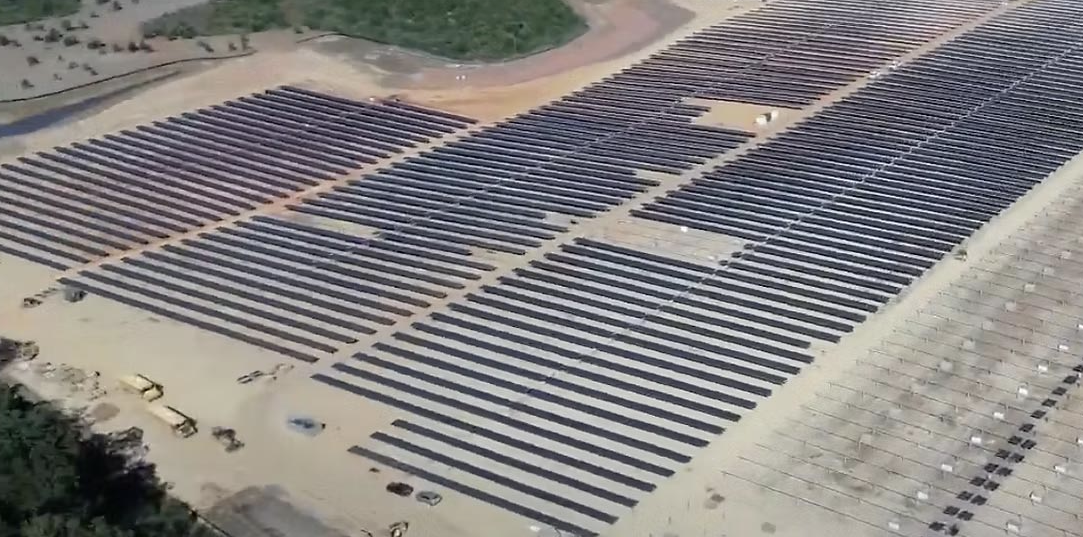
Waste, Decommissioning & Materials
A 208 MWAC two-phase development means double the panels, inverters, and wiring to manage at end of life — estimated around 2060.
Growing Waste Stream
A two-phase, 208 MWAC facility generates significantly more end-of-life waste than a single phase. Recycling capacity in BC lags far behind projected volumes.
Complex Materials
Modules combine glass, polymers, and metals including lead and cadmium. Disassembly is complex; improper handling risks environmental contamination.
Lasting Land Impact
Decades of soil compaction, fencing, and habitat fragmentation across ~776 hectares cannot be reversed when panels are eventually removed around 2060.
Community Forest vs. Industrial Solar Site
A 208 MWAC two-phase industrial development versus continued community stewardship of the same public land.
Community Forest Use
Current — managed for public benefit
Open public access for hiking, biking, snowshoeing
Sustainable forestry generating local revenue
Wildlife habitat and biodiversity corridors
Community identity and rural way of life
Industrial Solar Site
Proposed — 208 MWAC locked through ~2060
Restricted access behind security fencing across ~776 hectares
Shared industrial infrastructure: substations, roads, wiring, transmission across two phases
Revenue flows to external developers, not the community
Fixed, single-purpose land use from ~2030 through ~2060
Logan Lake Should Not Bear More Industrial Traffic
Logan Lake is a small community — not an industrial corridor. Residents should not be expected to absorb wave after wave of heavy traffic from projects sited outside town.
Logan Lake Is Already Carrying Too Much Industrial Pressure
Logan Lake sits only about 5 km south of the proposed project area. It is a small town — a place where people live, raise families, and value the rural character that drew them here. It is not an industrial staging area.
Yet this community is already shaped by heavy industrial pressures. The nearby Highland Valley Copper Mine — one of the largest open-pit copper mines in the world — has long been a dominant presence in the region. Its ongoing mine life extension is increasing industrial intensity further, bringing more heavy equipment, more haul traffic, and more strain on local infrastructure.
Logan Lake residents are not starting from a clean slate. They are already living with significant industrial activity on their doorstep.
Another Major Project Means More Traffic, Not Less
The proponent's own project documents state that access to the proposed solar development is via Tunkwa Lake Road. Those same documents identify increased traffic and road use on Tunkwa Lake Road and access roads as a potential project effect.
This is not a remote, isolated site with its own dedicated industrial access. It depends on the same road network that connects Logan Lake residents to their homes, their recreation, and their daily lives. Construction of a two-phase, 208 MWAC solar development — roughly 14 times larger than BC's largest existing solar facility — would bring sustained heavy vehicle traffic through a landscape that simply was not built for it.
More heavy vehicles. More dust. More noise. More congestion. More wear on roads that already serve ranchers, recreation users, and local residents.
"Logan Lake is a small town already living beside major industrial activity. It should not be forced to absorb yet another wave of traffic, noise, dust, and disruption from a project that does not belong here."
A Small Town Should Not Be Forced to Absorb Endless Industrial Spillover
There is a pattern here that residents recognize: industrial projects are sited near small communities because the land is available and the political resistance is expected to be low. The costs — traffic, noise, dust, road damage, safety risks — are absorbed locally, while the benefits flow elsewhere.
Logan Lake should not be treated as an industrial sacrifice zone. If a utility-scale solar development requires local roads and town-adjacent access to function, that is not evidence of a convenient location. It is evidence that the location is wrong.
Cumulative Effects Matter
Residents are not reacting to one isolated project. They are responding to another layer of industrialization stacked on top of what already exists. The Highland Valley Copper Mine expansion is already increasing industrial intensity. Road traffic is already heavier than it was a decade ago. Dust, noise, and heavy-vehicle movements are already part of daily life.
Adding a major solar construction project — with its own heavy equipment, gravel hauling, panel deliveries, crane operations, and workforce traffic — compounds those pressures. Each project on its own may claim its impacts are "manageable." But for residents, the cumulative burden is what matters. And that burden is growing.
What Comparable Solar Construction Traffic Can Look Like
A documented 20 MW solar project estimated roughly 284 two-way vehicle trips per day at peak construction. That is from a project less than one-tenth the nameplate capacity of what is proposed here.
Scaled proportionally, a 208 MWAC project — over ten times larger — could generate in the range of 2,500 to 3,000+ two-way vehicle trips per day during peak construction phases. Even with phased construction and logistical efficiencies, the realistic floor for a project of this scale is likely well over 1,000 daily trips.
These figures are illustrative comparators only — they are not project-specific forecasts for the m.ah a temEEwuh Solar Project. Every project has different logistics, phasing, and site conditions. But the math is straightforward: more panels, more racking, more inverters, more cable, more gravel, more concrete, more crews — all of it moving on the same local roads.
If even a 20 MW project can generate nearly 300 daily vehicle trips at peak, the construction traffic burden from a project more than ten times that size could be extraordinary — and it would fall squarely on roads shared by residents, ranchers, and recreation users.
This Is About Safety, Livability, and Community Character
Small-Town Safety
More heavy vehicles on narrow rural roads means more risk — for families, for cyclists, for ranchers moving cattle, and for everyone who shares these roads daily.
Cumulative Industrial Traffic
Mining expansion traffic is already increasing. Adding sustained solar construction traffic on top of that pushes a small community past what it should be expected to bear.
Road Wear, Dust, and Noise
Heavy construction vehicles degrade roads, raise dust, and generate noise that affects residents, livestock, and wildlife across the area — not just at the project site.
Community Character
Logan Lake's identity is rooted in its rural setting, its quiet roads, and its proximity to wild country. Industrial traffic erodes exactly the qualities that make this community worth protecting.
Our Position
Logan Lake has already absorbed more than its share of industrial pressure. The proposed solar project would add another layer of heavy traffic, construction disruption, and long-term road burden to a community that did not ask for it and should not be expected to carry it.
If this project cannot function without relying on local roads and town-connected access, then this is the wrong location. The burden of proving otherwise falls on the proponent — not on the residents who would live with the consequences.
Stand Up for Logan Lake
Oppose more industrial traffic through this community. Demand rejection of the project or a separate industrial-standard access solution that does not burden Logan Lake. Protect the town's safety, livability, and character.
Short-Term Construction Jobs vs. Long-Term Community Value
It is entirely reasonable for Logan Lake residents to want local jobs and economic opportunity. Every community does — and every community should be able to evaluate proposals honestly, without inflated promises.
Industrial-scale solar projects are typically labour-intensive during construction: site preparation, road building, panel installation, and electrical work can employ significant crews for months. But once panels are in the ground and the system is commissioned, the ongoing workforce drops sharply. The construction phase ends. The industrial footprint does not.
Before accepting a project of this scale, Logan Lake deserves a clear-eyed look at the real economic exchange — not the version shaped by project marketing.
Construction Work Ends. The Footprint Remains.
Solar construction generates activity — trucks, crews, equipment, local spending. For a two-phase, 208 MWAC project, the construction period could bring a visible burst of economic energy to the area.
But that period is temporary by nature. Construction timelines for utility-scale solar are typically measured in months per phase, not years. Once the workforce demobilizes, the daily economic presence shrinks dramatically — while the fenced industrial footprint, the altered roads, the changed viewscapes, and the land-use restrictions remain for decades.
Temporary employment should not be confused with lasting prosperity. The question is not whether construction creates work. It does. The question is whether a short window of construction activity justifies the long-term trade-offs this community would carry.
Short Construction Phase
Peak employment lasts months, not years. Once panels are installed and systems commissioned, the large workforce leaves.
Decades of Land-Use Consequences
Fencing, access restrictions, road wear, visual change, and reduced recreation quality persist for the full project life — estimated through approximately 2060.
Permanent Jobs Are Likely Minimal
Once operational, utility-scale solar facilities are among the least labour-intensive forms of energy generation. Automated monitoring, periodic panel cleaning, inverter servicing, and vegetation management do not require large permanent teams. A facility of this scale might support a small number of ongoing positions — far fewer than the construction workforce that preceded them.
That reality matters. If the primary economic argument for the project rests on employment, residents should ask the straightforward question: how many local people will still have project-related jobs two years after commissioning? Five years? Ten?
Very limited operating employment does not justify overselling the economic upside of a project that will reshape the landscape around Logan Lake for a generation.
What Logan Lake Could Be Giving Up
The value of the land around Logan Lake is not measured only in resource extraction or energy output. It is measured in the quality of life it sustains — in recreation access, in the open character of the landscape, in the ranching and resource uses that have defined this area for generations, and in the experience of residents and visitors who come here because it is not industrialized.
A fenced, 776-hectare industrial solar development does not simply occupy a remote parcel. It changes the character of the surrounding area. It adds industrial road traffic. It introduces visual and noise impacts. It restricts access across land that has been open. It compounds the industrial pressure already exerted by mining activity in the region.
This is not just a project footprint question — it is a cumulative industrialization question. Every new industrial conversion around Logan Lake narrows what the area can be in the future. The community should think carefully about whether it wants more intact landscape and recreation-based value, or more fenced infrastructure and industrial traffic.
The construction crews will leave. The altered landscape will not. What visitors see, what residents experience, and what defines this place for the next generation will be shaped by decisions made now.
A Better Standard for Economic Benefit
Logan Lake deserves honest accounting — not just how many people build a project, but how many local people are still employed years later. Not just how many dollars flow through town during construction, but what the community gains and loses over the full life of the development.
Real long-term value comes from protecting the assets that continue to benefit the community year after year: intact landscapes, recreation access, clean water, ranching viability, and a quality of life that cannot be replaced once it is degraded.
Accepting decades of industrial impact in exchange for a short construction window and minimal permanent staffing is not sound community planning. It is a trade that benefits the developer's timeline, not the community's future.
Think Long-Term for Logan Lake
Scrutinize claims of economic benefit. Ask for honest job numbers — not just during construction, but for every year that follows. Insist that Logan Lake's long-term interests come before a developer's short-term timeline.
Water Systems Are Being Underestimated
Local water sources such as Guichon Creek are actively used and may be more significant than described in project documentation. Large-scale development affects how water moves across the landscape — with consequences for downstream users, livestock operations, and the broader watershed.
Why This Matters
- Guichon Creek supports active livestock operations year-round
- Development across a 776-hectare project area alters natural drainage patterns
- Sediment runoff and contamination risks persist through ~2060
- Official classification may understate real-world water use
What's at Stake
A 208 MWAC two-phase development through ~2060 will define how this post-wildfire land is used for a generation.
Land Recovery Trajectory
Post-wildfire land has recovery potential — industrial conversion removes that possibility
Future Land-Use Flexibility
Once committed to a 208 MWAC two-phase development, the land cannot serve other community needs through ~2060
Community Forest Management
Local governance and management decisions are diminished when land is committed to industrial leases
Infrastructure Resilience
A 208 MWAC two-phase development with shared electrical infrastructure in a wildfire-prone region introduces compounded long-term risk.
This decision will influence how wildfire-impacted land is managed across the region moving forward.
No Approval Without a Reclamation Bond
A two-phase, 208 MWAC development doubles the decommissioning liability. The public must not be left paying to clean it up.
What we are demanding
- Legally secured reclamation bond before construction of either phase
- Independent cleanup cost estimates
- Coverage for all panels, wiring, roads, fencing, and disposal across both phases
- Bond indexed to inflation
No bond, no build.
What We're Asking For
Full Two-Phase Assessment
The full 208 MWAC two-phase proposal must be assessed as a single integrated project — not reviewed piecemeal as separate phases.
Full Independent Environmental Assessment
No exemptions. A complete, independent review as required by the BC Environmental Assessment Act — covering the full project area.
Cumulative-Effects Study
Assess combined impacts on wildlife, hydrology, viewscapes, recreation, access, and long-term decommissioning across both phases.
Mandatory Reclamation Bond
Legally secured, inflation-indexed financial security posted before construction of either phase — covering all infrastructure and disposal.
Transparent Public Process
Meaningful engagement with residents, range tenure holders, and local stakeholders before any decisions are made on either phase.
If this project is evaluated, it must be evaluated at the full scale now proposed.
Get Involved — Make Your Voice Count
This project is in the BC Environmental Assessment process. Public participation matters — and it is being recorded.
You don't have to agree with everything on this site to take action. The BC Environmental Assessment process is where public input is formally recorded and considered. If you care about land use, water, access, or long-term impacts — now is the time to engage.
Register for Updates
Stay informed on milestones, comment periods, and key decisions directly from the BC Environmental Assessment Office.
Sign UpSubmit a Public Comment
Submit your input during open comment periods. Comments become part of the official public record.
Comment on the ProjectJoin the Community Advisory Committee
Apply to participate more directly in the process and help represent community perspectives.
Apply / Learn MoreGet Campaign Updates
Stay informed on new findings, case studies, and ways to take action as this project progresses.
This does not replace registering with the BC Environmental Assessment Office — we recommend doing both.
This Is Where Decisions Are Influenced
The Environmental Assessment process is one of the few places where public input is formally documented and considered. Participation here carries more weight than social media or informal discussion.
Links direct to the official BC Environmental Assessment Office engagement page for this project.
Volunteer to Help Defend Logan Lake Community Forest
This campaign needs volunteers who care about community access, local character, recreation, and keeping the community forest for community use rather than industrial conversion.
Our first goal is to build awareness quickly and professionally so residents understand the scale of what is being proposed and what is at stake.
Immediate Volunteer Priorities
Door-to-Door Flyer Delivery
Help distribute campaign materials to homes, neighbourhoods, acreages, and local businesses so more residents understand the proposal and know where to find accurate information.
Social Media Posting
Help share campaign updates, facts, graphics, and meeting notices through local Facebook groups and community channels.
Additional Ways to Help
Ready to Help?
Fill out the volunteer form below and we'll connect you with the team. Every door knocked and every post shared makes a difference.
This campaign is not anti-energy. It is about honest numbers, responsible land use, full public review, and ensuring industry — not the public — carries long-term cleanup risk.
Volunteer for Logan Lake
Tell us a little about yourself and how you'd like to help. We'll connect you with the team.
Your information is kept confidential and used only for campaign coordination.
Take Action
Your participation in the public process matters. Here's how to make your voice count.
Sign the Petition to the LLCF Board
Call on the Board to reject any solar leases or land-conversion proposals on Community Forest land.
Submit Input to the Environmental Assessment
The public EA process is your formal opportunity to be heard. Submit your concerns directly.
- Visit the BC Environmental Assessment Office website
- Search for the Logan Lake solar project
- Submit a written comment during the public comment period
Write to the TNRD & LLCF
Send a respectful letter urging: no endorsement, insist on full EA, protect the Community Forest mandate.
Download the Briefing (PDF)
Fact-based summary: why industrial solar on Community Forest land raises serious land-use concerns.
Share What This Forest Means to You
Upload a quote or photo. Personal accounts from residents strengthen the public record.
Stay Informed
Get updates on meeting dates, hearing schedules, and project developments.
Case Studies: What Communities Learn Too Late
Industrial solar is marketed with peak numbers and polished visuals. Communities live with the land conversion, infrastructure, underperformance, and cleanup risk.
Nameplate vs. Reality
How peak capacity numbers can obscure much lower average output in real-world operation.
Solar Waste and End-of-Life Cleanup
Panels, wiring, inverters, fencing, roads, and who pays when the project reaches the end of its life.
Fire, Damage, and Industrial Risk
What it means to place large electrical infrastructure in a wildfire-prone landscape.
Forest and Crown Land Conversion
Why land-use tradeoffs matter when public and recovering landscapes are industrialized for decades.
This campaign is not anti-energy. It is about honest numbers, responsible land use, full public review, and ensuring industry — not the public — carries long-term cleanup risk.
Want your input formally considered? Participate in the BC Environmental Assessment process.
Go to Official Engagement Page